Start with location, not wattage
Power and light planning begins at the pad. In Gainesville, equipment commonly sits on compacted sand or a mix of curb cuts and grassy shoulders next to concrete. Soft or uneven ground favors wider-stance, trailer-mounted units; firm pavement suits compact frames. If the unit must remain close to occupied interiors, emissions and sound output become just as important as capacity.
- Can the machine sit below the task without blocking pedestrian or service routes?
- Is the surface paved, compacted, or loose, and will afternoon storms create standing water or soft spots?
- Do nearby facilities require low-noise, low-emission operation during standard hours?
Generators: power stability versus sensitivity
Indoor electrical work around labs, clinics, and data-heavy spaces often requires clean, steady power. Where sensitive equipment is present, power quality and grounding plans are as critical as total output. Outdoor construction in Gainesville’s rainy season pushes toward weather-protected enclosures and cable routing that avoids ponding areas. Plan cable runs to bypass door thresholds and high-traffic corridors.
Consider: - Load profile (starting surges vs. steady draw) - Distance from generator to distribution point, including any grade changes - Venting and exhaust direction if staging near doors or air intakes
Light towers: beam placement in a storm-prone setting
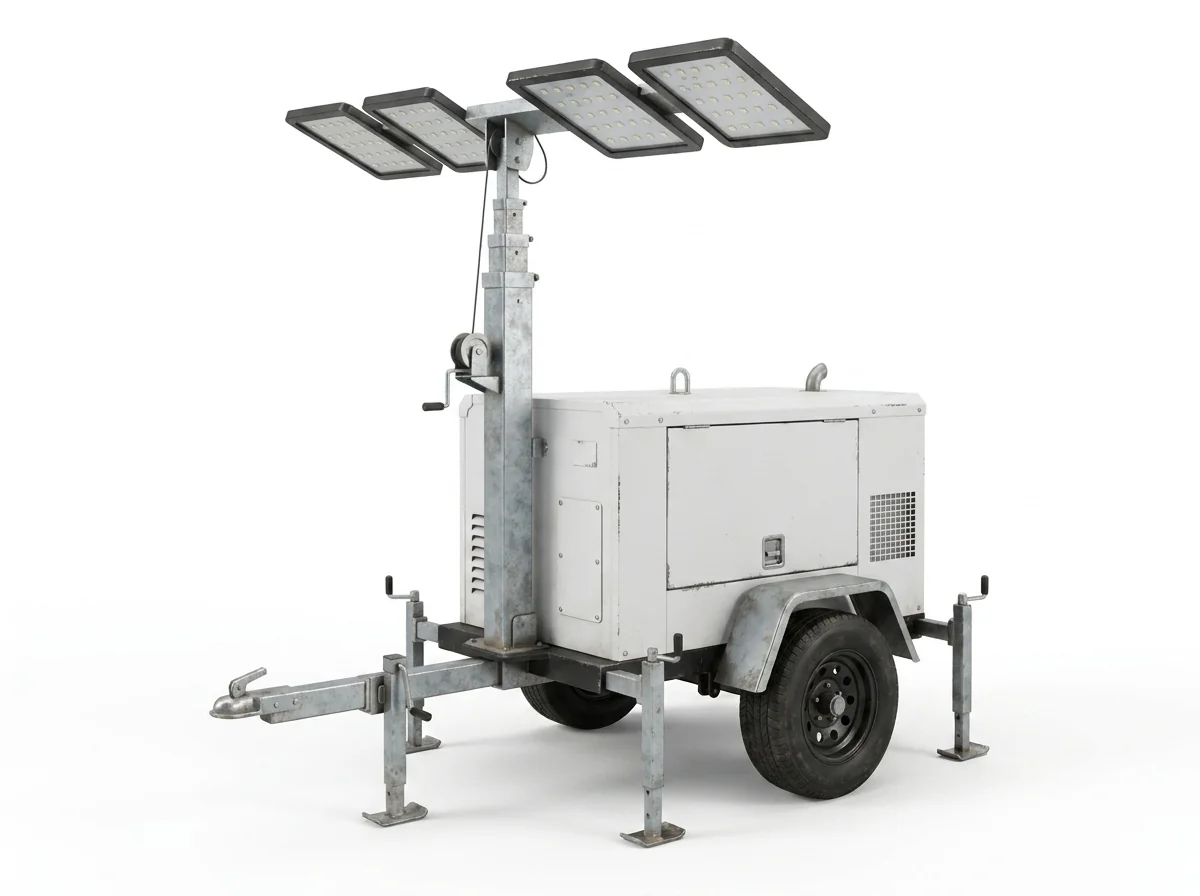
Frequent afternoon storms and fast-moving cloud cover change nighttime visibility around industrial and civic job sites. Choose mast height and lamp type based on whether the unit can sit outside the active work zone and still clear equipment and temporary fencing. On sandy or graded surfaces, outriggers and level ground are planning priorities.
- Sightlines over stored materials or temporary barricades
- Reflective glare off wet pavement after rain
- Access for repositioning between phases without crossing soft ground
Tying in with access equipment
Night work often pairs with elevated tasks like facade checks or signage repairs. If an aerial platform will share the route, confirm that the generator or tower placement leaves turning room. For interior punch lists near finished floors, consider electric lifts with non-marking tires; see /electric-scissor-lift-rental/ and /vertical-mast-lift-rental/ for tight indoor work. For exterior staging on unpaved lots, see /rough-terrain-scissor-lift-rental/ or /boom-lift-rental/.
Gainesville-specific considerations
- Humid, stormy conditions favor weather-resistant enclosures and lighting with durable connectors.
- Gently rolling grades around industrial sites can put a tower slightly off-level; plan for leveling hardware clearance.
- Mixed-use areas near healthcare and academic buildings may require quieter, lower-emission power during daytime.
For a category overview across site needs, visit /products/ or reach out via /contact/.